Spatial Computing & Extended Reality (XR): Redefining the Boundaries of Human Experience
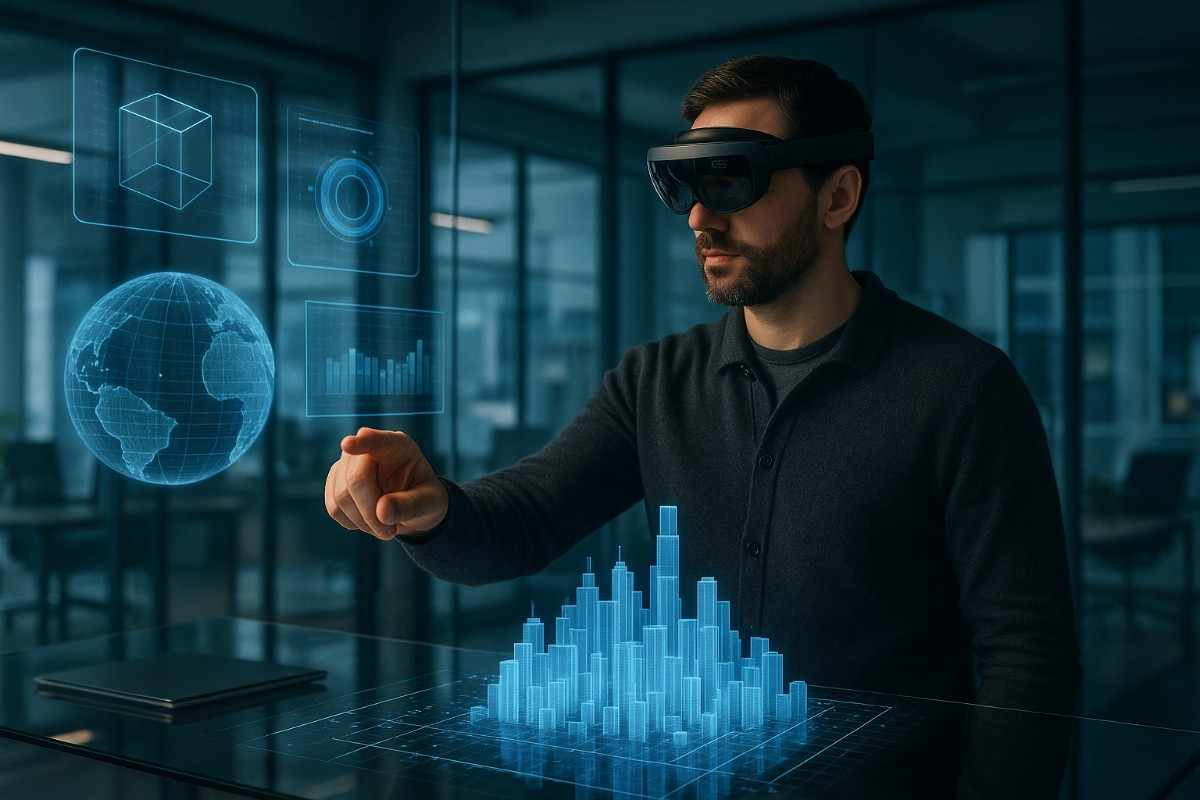
The line between the physical and digital worlds is disappearing. From immersive 3D environments to interactive holograms that blend seamlessly into our surroundings, the next evolution of human–computer interaction is here. Welcome to the era of Spatial Computing and Extended Reality (XR)—a revolution transforming how we work, create, and connect.
As the successor to the mobile and cloud revolutions, spatial computing isn’t just about what we see—it’s about how we interact with information in three dimensions. It forms the foundation of a new digital reality where technology becomes truly spatial, intelligent, and human-centered.
What Is Spatial Computing?
Spatial computing refers to the ability of computers to understand and interact with the physical space around us. It combines augmented reality (AR), virtual reality (VR), mixed reality (MR), artificial intelligence (AI), and sensor-based technologies to create experiences that merge the real and digital worlds.
In simple terms, spatial computing allows digital objects to exist and behave as if they’re part of our real environment—anchored to physical space, responsive to our movements, and aware of context.
It involves three key capabilities:
- Perception: Understanding the physical world through sensors, cameras, and depth mapping.
- Computation: Processing spatial data to interpret gestures, positions, and objects.
- Interaction: Enabling users to engage with digital content naturally—using gestures, gaze, voice, or touch.
Extended Reality (XR): The Umbrella of Immersive Technologies
Extended Reality (XR) is the collective term that encompasses AR, VR, and MR technologies, each offering a unique way to blend the physical and digital:
- Augmented Reality (AR): Overlays digital elements onto the real world—for example, AR navigation or product visualization.
- Virtual Reality (VR): Creates fully immersive digital environments that replace the real world, such as training simulators or virtual meetings.
- Mixed Reality (MR): Combines real and digital elements interactively—seen in holographic collaboration tools like Apple Vision Pro or Microsoft HoloLens.
Together, XR technologies are redefining how humans experience digital content—not through screens, but in the space around us.
Why Spatial Computing Matters
Spatial computing isn’t just a visual upgrade—it’s a paradigm shift in how humans and machines communicate. Traditional computing required screens, keyboards, and mice. Spatial computing removes those barriers, making interaction natural, intuitive, and contextual.
Here’s why it matters:
- Immersive Workspaces: Meetings, design reviews, and collaboration happen in 3D environments where participants interact with lifelike digital twins of real-world objects.
- Enhanced Learning and Training: From surgeons practicing complex procedures to engineers mastering machinery, XR enables hands-on experiences without real-world risk.
- Revolutionized Commerce: Shoppers can visualize furniture in their homes or test-drive vehicles virtually—enhancing engagement and confidence.
- New Creative Mediums: Artists, architects, and designers can build directly in 3D space, transforming imagination into immersive reality.
The Technologies Powering Spatial Computing
The magic of spatial computing emerges from a powerful convergence of technologies working in harmony:
- Computer Vision: Allows systems to recognize, map, and track the real world in real time.
- AI and Machine Learning: Enable contextual understanding, gesture recognition, and adaptive experiences that respond intelligently to user behavior.
- 3D Modeling and Digital Twins: Create realistic virtual replicas of physical objects and environments.
- Edge Computing and 5G: Deliver the bandwidth and low latency needed for real-time immersive interactions.
- Advanced Hardware: Headsets, haptic gloves, eye trackers, and spatial audio systems bring digital environments to life with sensory precision.
Together, these technologies form an ecosystem where digital experiences blend seamlessly into our daily lives—turning interaction into immersion.
Business Impact and Real-World Applications
Spatial computing is already reshaping industries across the globe:
- Healthcare: Surgeons use XR-guided visualization for precision operations and training.
- Manufacturing: Engineers collaborate on digital twins of production lines for predictive maintenance and real-time optimization.
- Education: Students explore historical sites, molecules, and physics simulations in immersive 3D environments.
- Retail: Virtual showrooms let customers experience products before purchase, improving satisfaction and reducing returns.
- Real Estate: Buyers can walk through properties remotely in fully interactive, realistic virtual spaces.
These applications enhance efficiency, improve decision-making, and create richer, more engaging user experiences.
The Human–Machine Interface of the Future
Spatial computing represents the next evolution of contextual computing—where technology anticipates and responds to human needs in real time. Instead of looking at screens, we’ll look through them, with digital content seamlessly woven into our physical surroundings.
Imagine walking into a workspace where your schedule, analytics, and tools appear as floating holograms. Or designing a building by sculpting virtual materials in 3D with your hands. This isn’t science fiction—it’s the emerging reality of spatial computing.
Challenges on the Road Ahead
Despite its immense potential, spatial computing faces several challenges:
- Hardware Limitations: Current XR headsets face constraints in size, weight, comfort, and battery life.
- Standardization: The lack of cross-platform interoperability slows industry-wide adoption.
- Privacy and Ethics: Devices that constantly map physical environments raise serious data security and ethical considerations.
- Accessibility and Cost: High hardware and development costs limit accessibility for many organizations and users.
Addressing these challenges will be critical for spatial computing to transition from innovation to everyday reality.
The Future Landscape
The future of spatial computing and XR is both bright and boundless. As devices become lighter, sensors more precise, and AI more context-aware, our relationship with technology will fundamentally evolve.
In the coming decade, we’ll move from viewing information to living inside it—working, learning, and collaborating in immersive, data-rich environments that feel as natural as the real world.
Conclusion
Spatial computing and extended reality mark a monumental leap in human–machine interaction. By merging the physical and digital worlds, they enable experiences that are immersive, intuitive, and intelligent.
This isn’t just the next chapter of computing—it’s an entirely new dimension. The real and the virtual are no longer separate; they’re converging into a shared space where creativity, productivity, and imagination have no boundaries.
Welcome to the spatial era—where reality itself becomes the interface.